
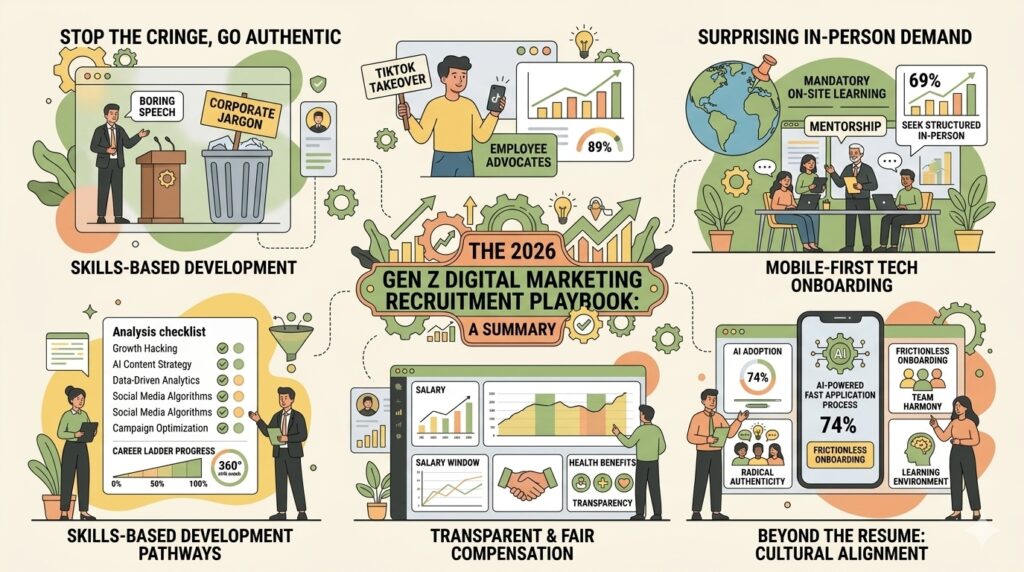
Enterprise recruitment is facing a massive cultural shift. The traditional corporate playbook for hiring digital marketing talent is officially broken. While major brands continue to rely on heavy corporate jargon, rigid ATS platforms, and boilerplate employer branding, the most ambitious Gen Z professionals are simply scrolling past.
For VPs of Talent Acquisition, CMOs, and enterprise HR leaders, securing top-tier growth hackers, social media strategists, and AI-native creators requires an entirely new approach. To win the war for Gen Z digital marketing talent, enterprise companies must rethink their recruitment marketing strategies, embrace radical authenticity, and adapt to unexpected workplace shifts.
The Surprising Office Realities Driving Gen Z Digital Marketers
For years, the mainstream narrative claimed that younger workers only cared about fully remote work. However, recent data completely flips this assumption on its head.
According to the Candidate Behaviour Barometer by The Global Recruiter, 69% of Gen Z candidates believe that spending physical time in the workplace significantly improves their career progression. While senior executives often prefer remote or hybrid setups, entry-level digital marketing professionals are twice as likely to want fully office-based or structured in-person roles.
Why? Because they want to learn. More than half of these early career professionals explicitly state they learn faster by physically working around cross-functional colleagues. If your enterprise is only offering disconnected remote roles with zero mentorship, you are actively losing out on the most ambitious digital marketers who want rapid skills-based development pathways.
How to Recruit Gen Z Digital Marketing Talent (Without Being Cringe)
Gen Z has an exceptionally high filter for corporate inauthenticity. If your employer brand feels like a polished, dynamic ad campaign, they will see right through it. To build deep brand trust, enterprise employers must pivot from transactional hiring to relationship-driven recruitment marketing.
- Ditch the Corporate Jargon: Stop asking for “synergistic self-starters who wear many hats.” Speak the native language of digital channels. Use short-form video content on platforms like TikTok and Instagram to show your culture rather than tell it.
- Empower Employee Advocates: According to data from Handshake’s Gen Z Recruitment Trends, 89% of young job seekers are significantly more interested in seeing content from early career employees than from company executives or traditional recruiters. Give your current junior marketers the microphone for “day-in-the-life” features and raw behind-the-scenes office takeovers.
- Mandate Absolute Transparency: Salary transparency is non-negotiable. Gen Z digital marketers expect clearly stated compensation windows, concrete health benefits, and visible pathways for internal upward mobility directly in the job description.
Streamlining the Tech-Enabled Onboarding Experience
Gen Z consists of true digital natives who expect a completely frictionless, mobile-first technical experience. A clumsy, multi-page application portal requiring candidates to upload a resume and then manually re-enter their entire work history causes massive drop-off rates.
Forward-thinking organizations are leaning on automated HR systems and AI capabilities. According to the recent Deloitte Global Gen Z and Millennial Survey, day-to-day AI adoption among Gen Z professionals surged to 74%, with young workers treating AI as an essential career accelerant.
If your company doesn’t offer modern, tech-enabled self-service tools, or if your application process isn’t optimized for mobile devices, top candidates will assume your internal marketing tech stack is equally outdated.
The Bottom Line for Enterprise Employers
The future of your brand’s digital presence relies on the creators, analytical minds, and growth marketers entering the workforce today. Winning them over requires removing operational friction, abandoning corporate pretension, and offering genuine workspace mentorship.